

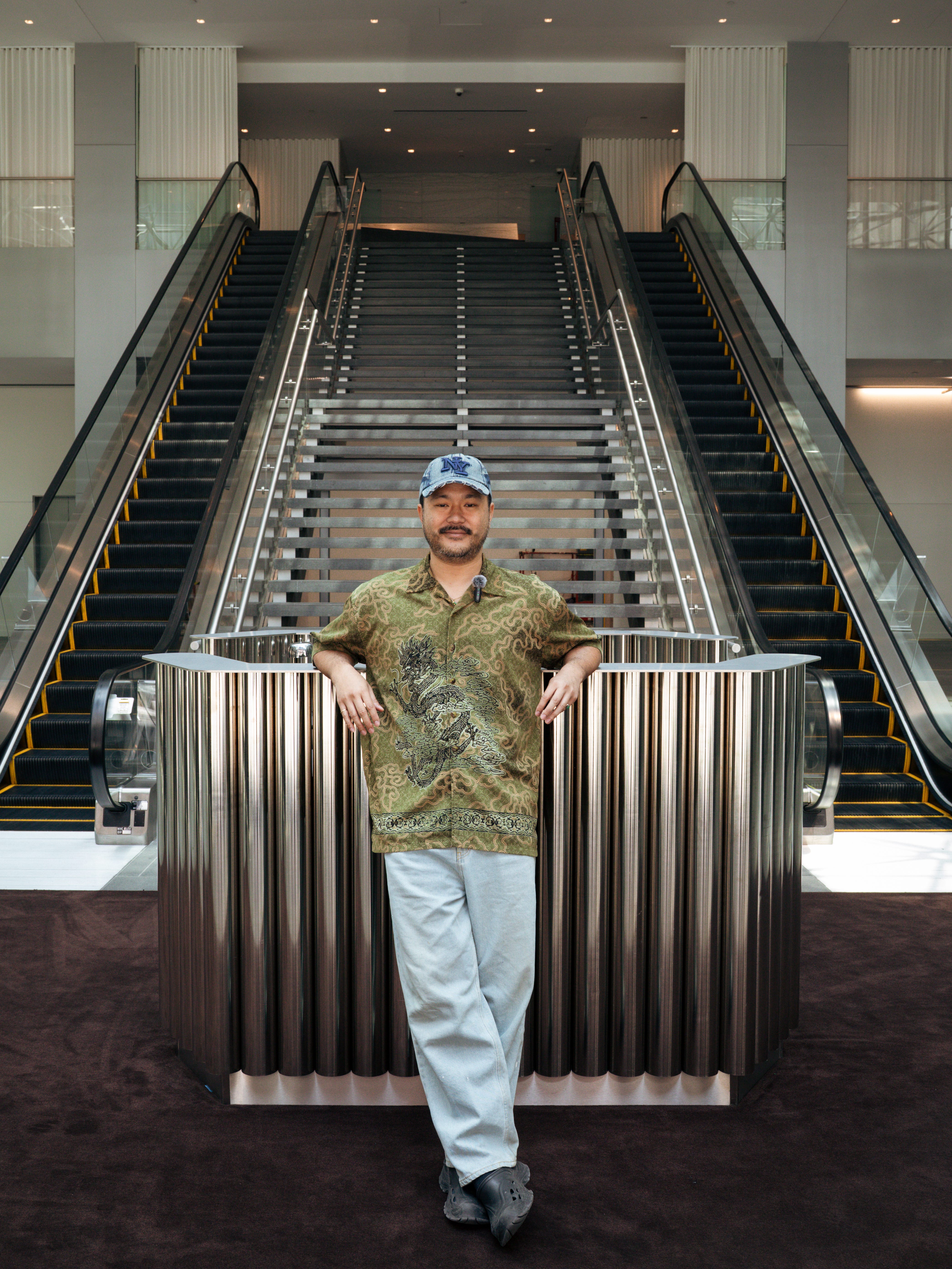

His designs beautifully balance aesthetics with emotional effect, whether it’s a stunning floating pool in the East River or a peaceful bathhouse in the Cayman Islands. This ideal combination of creativity and practicality sets Wong’s work apart.
As the visionary founder of Food New York, he has carved out a unique niche by blending art, functionality, and cultural stories in exciting ways. His impressive portfolio includes high-profile partnerships with icons like the late Virgil Abloh, Nike, and Kim Kardashian. However, what truly inspires Wong is his heritage and his heartfelt desire to create spaces that unite people.
Wong opened Food New York in the heart of New York’s Chinatown in 2010. The neighborhood formed the firm’s character and the approach of its architectural practice. “There were a lot of deep cultural roots that affected our work. We always talked about community, but it was from a top-down perspective. After being in the neighborhood for a couple of years, we had to tap into things that were local to the community. Now, every project we try to make hyper-local,” Wong said. Instead of imposing a style, the locality influences the look and feel of the project, with context becoming the face of Wong’s process.
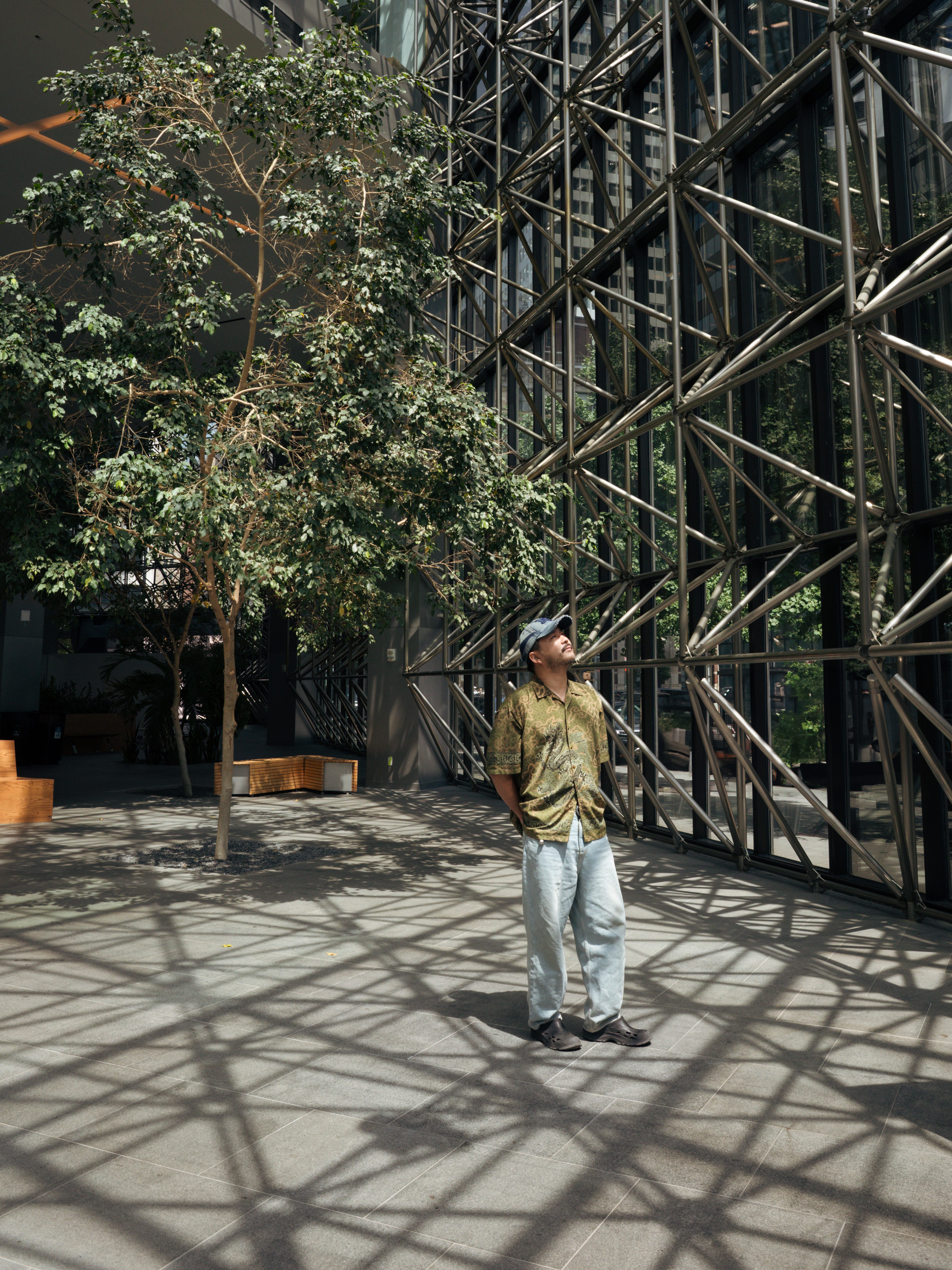
In 2023, The New York Times published a multi-profile piece centered around Asian American figures under the pretense of “saving Chinatown.” While Wong doesn’t entirely agree with this headline, he admits the notion intrigues him.
“I never know how I feel about it when it’s presented as ‘saving Chinatown,’ because sometimes we should just leave it alone. On the other hand, there’s the threat of gentrification, but there’s also a need to transform,” Wong explained. He noted that the older generation has competing visions for Chinatown compared to its youth. Wong emphasized that he’s actively listening to all perspectives to see where Food New York fits in. “It’s exciting how we can be a part of this transformation without displacement, and that will be interesting to watch unfold.”
To encourage people to return to the neighborhood after the COVID-19 pandemic, Food New York launched the Food Mahjong Club, inviting neighbors and friends to a community game night, expanding the firm’s broader mission. However, Wong avoids defining the firm’s scope of work, which resembles an ever-changing menu.
“I’ve been trying to think of an underlying theme or connective tissue of our work because aesthetically and materially, it’s all pretty different,” Wong says of his firm. “I think the one foundational thing is that we always work with an emerging culture. Even if the client isn’t coming in with an explicit ask to create change, that’s always the angle that ends up being the most impactful.”
Wong’s community-driven mission resonated far beyond Chinatown. Even before Food New York, Wong’s architectural language attracted collaborators redefining culture in their own fields, including some of the world’s most influential creatives.

One such collaboration was the eight-year project on the home of Kim Kardashian and Kanye West. “What was nice about working with them was that Kanye was interested in going against what everyone else was doing at that time with their homes at that level,” Wong said. He described the process as similar to marriage counseling or therapy. “Through even like a paint color, you start seeing priorities come up that maybe they haven’t talked about yet as a couple,” he explained.
It’s undeniable that Kim’s relationship with Kanye played a pivotal role in her evolution into the fashion icon she is today. When they began dating in 2012, Kanye helped her refine her style, literally throwing items out of her closet, altering it into something more sophisticated.
Wong mentioned the wardrobe overhaul and how Kanye’s input with the houses mimicked this. “This was as much for him and his family as it was for how other people are going to see them,” Wong said. He recounted how Kanye would have teams of artists, designers, and musicians over at his home, bouncing between groups, sharing his opinions.
Weighing in on Kanye’s design methods, Wong gained a front-row view of Kanye’s world-building, observing the aesthetic connections between his music, home, and clothing line. The main house in Calabasas that Wong and Kanye designed was primarily white, but with a distinct shade of white that had a sand undertone. The monochromatic and serene design, similar to his Yeezy collections, which often feature earth tones, has created a cohesive visual identity for Kanye that has endured for decades.


Through Kanye, Wong also witnessed Virgil Abloh’s dynamic partnership with West. Abloh’s role as creative director helped shape many of Kanye’s fashion and music projects, mixing high fashion with street culture and leaving a lasting mark on both industries.
“People like Kanye and Virgil are the clients who bring ideas that push you into new sectors you hadn’t considered, and you’re constantly moving in multiple directions with them,” Wong shared.
Wong collaborated with Virgil Abloh on the design of the first six Off-White stores, beginning with the brand’s flagship in Hong Kong, which opened in December 2014. The first part of the Hong Kong store resembled a lush garden jungle rather than a traditional storefront. Wong explained that what they did challenged people’s perceptions of what a store could be. Drawing on his training in public space design and his childhood spent hanging out in skate/surf shops, he envisioned a place where people could simply be with one another. The store was not just a site for selling clothes, but a location where people could buy into aspiration.
A significant takeaway for Wong was Abloh’s approach of never saying no. Wong said that “if someone suggested something he disagreed with, Abloh would find a way to redirect the conversation or present his thoughts in front of them, which sparked something new and kept the momentum going.”
“That kind of attitude I’ve never seen in anyone else. It’s like guidance and flow combined. It’s wild. And especially when you think about how he was going through thousands of ideas a day,” Wong reflected.
After Virgil’s death, Wong shared that he often thinks back to the energy that Virgil brought to creating. “He was intuitively doing it. I have to remember to do that a lot - to redirect instead of giving a straight no. That piece of how he worked will remain in how we work in the studio. It was amazing how energized you’d get working with him, and how many people he energized. That kind of optimism and transfer of energy is something I also try to do as much as I can.”
“I learned so much working with Virgil, especially not to be overly precious with the stuff you’re putting out in the world,” Wong said.
“Virgil’s body of work feels so complete, not because of any individual thing he was putting out, but because the total, vast collection of work felt like a singular personal project. His projects–like welcoming young Black kids in architecture, for example, making fashion scholarships for people that didn’t have access to fashion funds, making architecture more accessible, making book design a thing that was cool again–all of these things were outcomes of the day-to-day work he was producing. It makes putting out individual designs much less precious knowing that it’s building to a much larger effect.”
In an age of creative and capitalistic perfectionism, Virgil’s ethos, as told by Wong, is provocative simply because his relentless artistic output and generosity of spirit opened countless doors for others.
This same enthusiasm infuses Wong’s new work—a multi-site project in Barbados with Ghetto Gastro founder Chef Pierre Serrao. Wong spoke about working in a place steeped in history and recognizing its potential for transformation and cultural elevation. Opportunities like this make him especially grateful and excited to help shape meaningful change, with Serrao’s passion guiding the way.
While Wong spends much of his day shaping exteriors, the essence of his work lies within. His architecture isn’t about imposing a vision but about nurturing possibilities. He has mastered the art of creating rooms that gather people, feed their imaginations, and invite them to dwell in metaphors. In an era when architecture often chases spectacle or commerce, Wong reminds us that spaces can still carry meaning, memory, and movement—quietly reshaping how we live and illuminating fresh ways of seeing the world and each other.