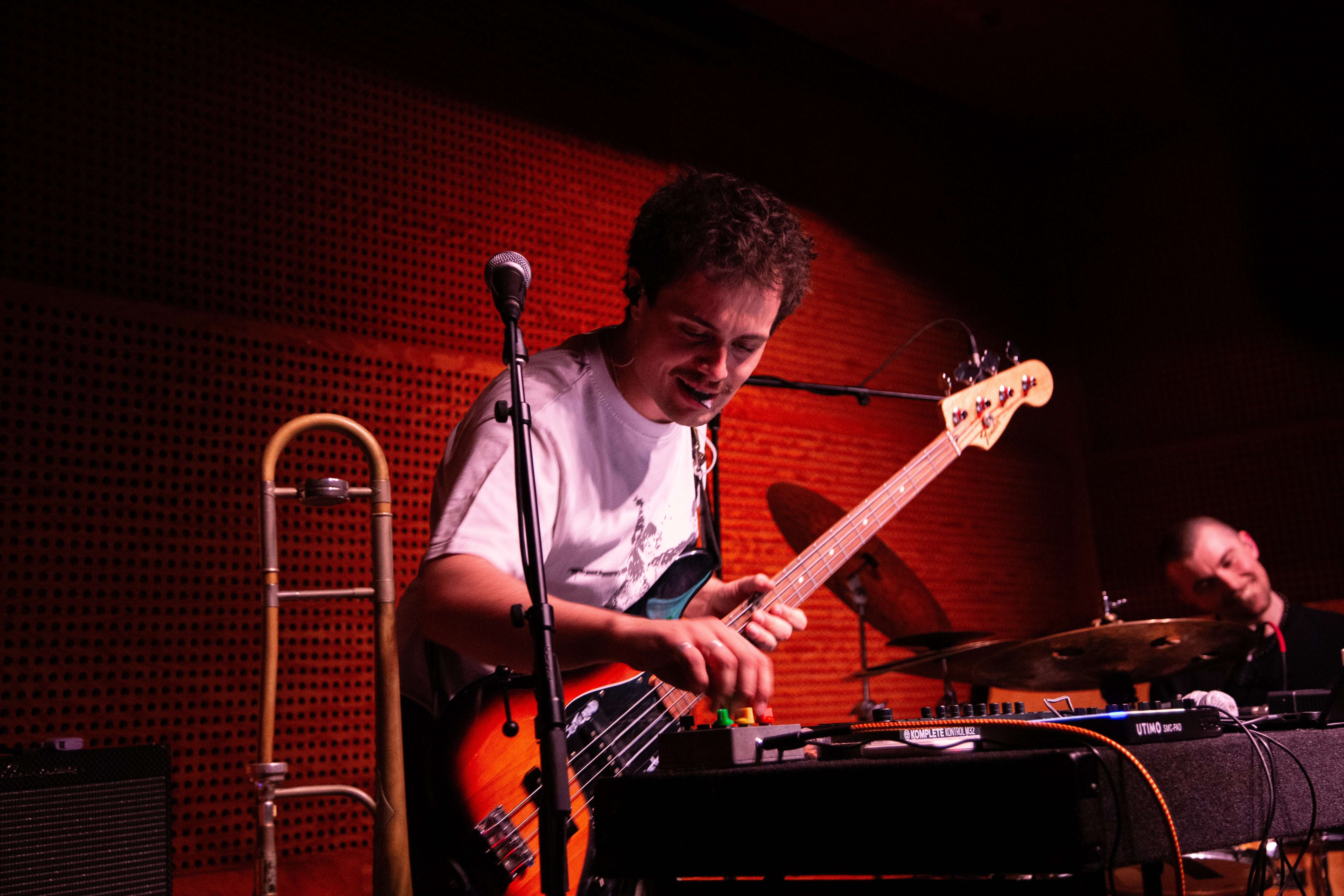
“It’s okay if it’s messy,” in the spirit of Olivia Dean (a mutual favorite, and as it turns out, a universal one for men anywhere) Glasgow’s corto.alto serves up an infectious sense of play, laughter, and symphonies where spontaneity is indeed the point.
Band-leader, producer, and musician, Liam Shortall’s operation is nothing short of spectacular.
There’s been a growing parasocial haze looming over live performances, as if in order to enjoy the music, one must praise the artist like a deity. The concert – a spiritual ritual – is designed to bear witness rather than participate. Grab a drink, try to peer over the tall person in front of you (if you’re 5’1 like me) and snag a few clips to prove you were indeed there. Rinse and repeat.
Whether it’s been FKA Twigs, Tyler the Creator, or my neighborhood resident Bushwick DJs, very rarely have I as an audience member felt necessary to the performative experience.
In the strange red-tinged space of Public Records, Shortall collapsed this distance in an instant. We were now in corto.alto’s living room, albeit a touch futuristic.
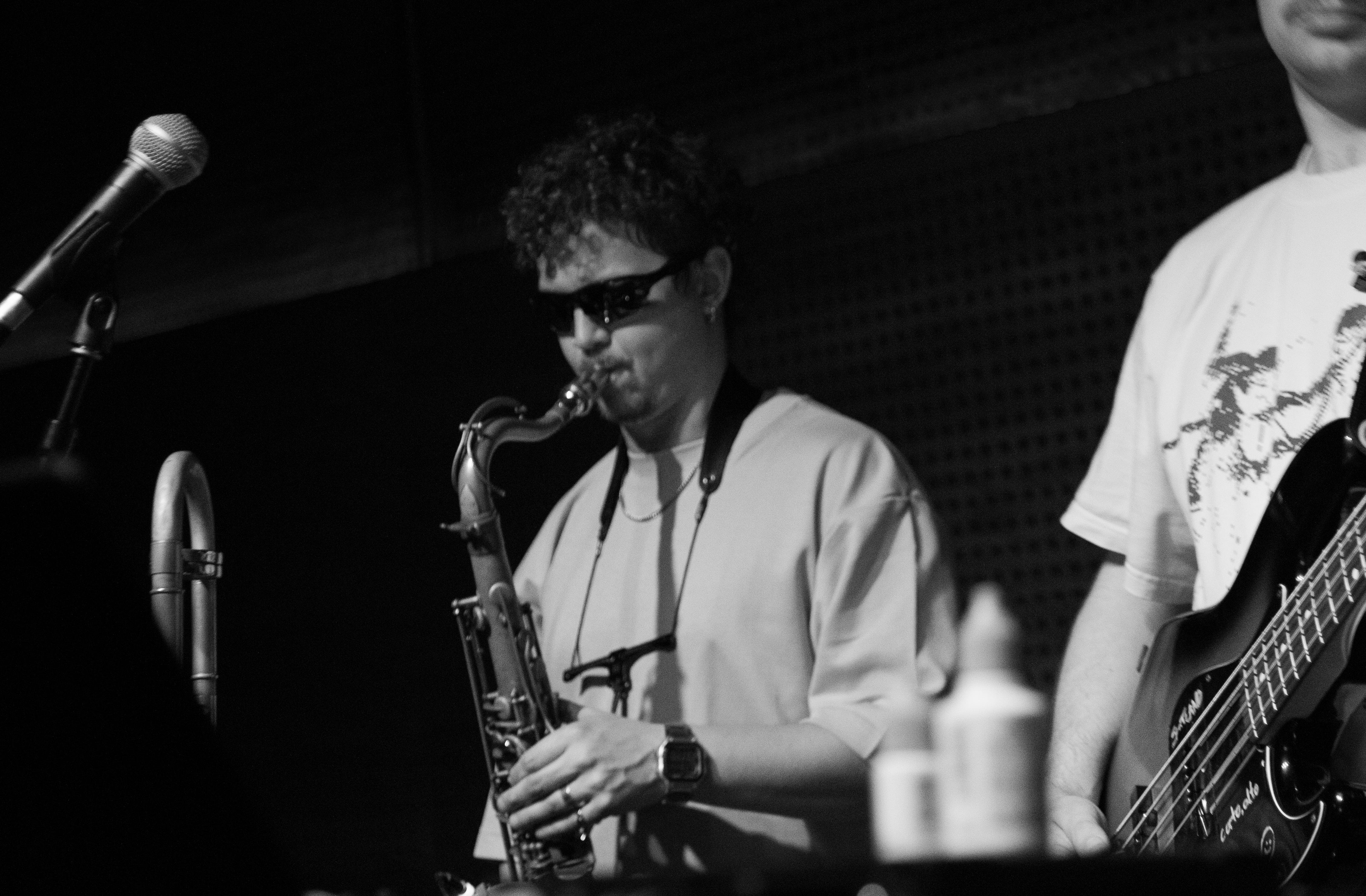
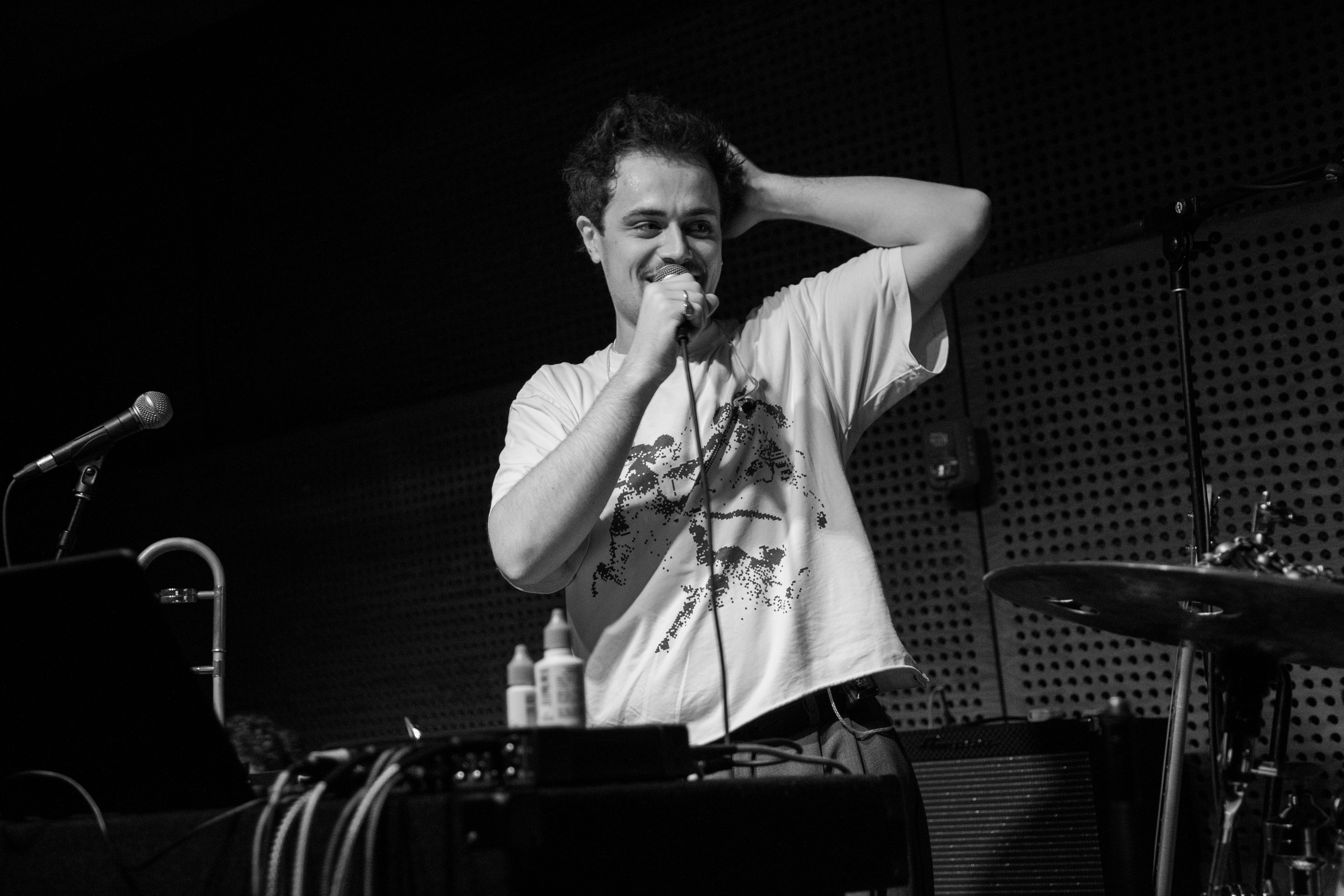
Step one, disarm the audience as we immediately were made to privy the group’s jetlag. Step two, knock our bloody socks off with expansive instrumentation, extended solos, cross-pollination of genres, and “a sonic palette of various colors within the set.”
Blurring the line between composition & improvisation, you felt the sense that even they didn’t fully know where the music was landing next, but it was sure as hell going to be good.
At its core, their ethos is simple:
“Performing is a symbiosis. There’s no gig without the audience, and there’s no gig without us,” Shortall remarked. Throwing meticulousness to the wind, Shortall called upon an audience member to fool around with the sampler (although he did stress the audio be kept on beat) during a jazz-infused Yukon remix. The room erupted into a series of cheers and chuckles, immediately folding the audience into the performance itself as we all clamored to get a glimpse of what button he would press next.
And it’s this absence of hierarchy that latches you in, even between the bands’ members.
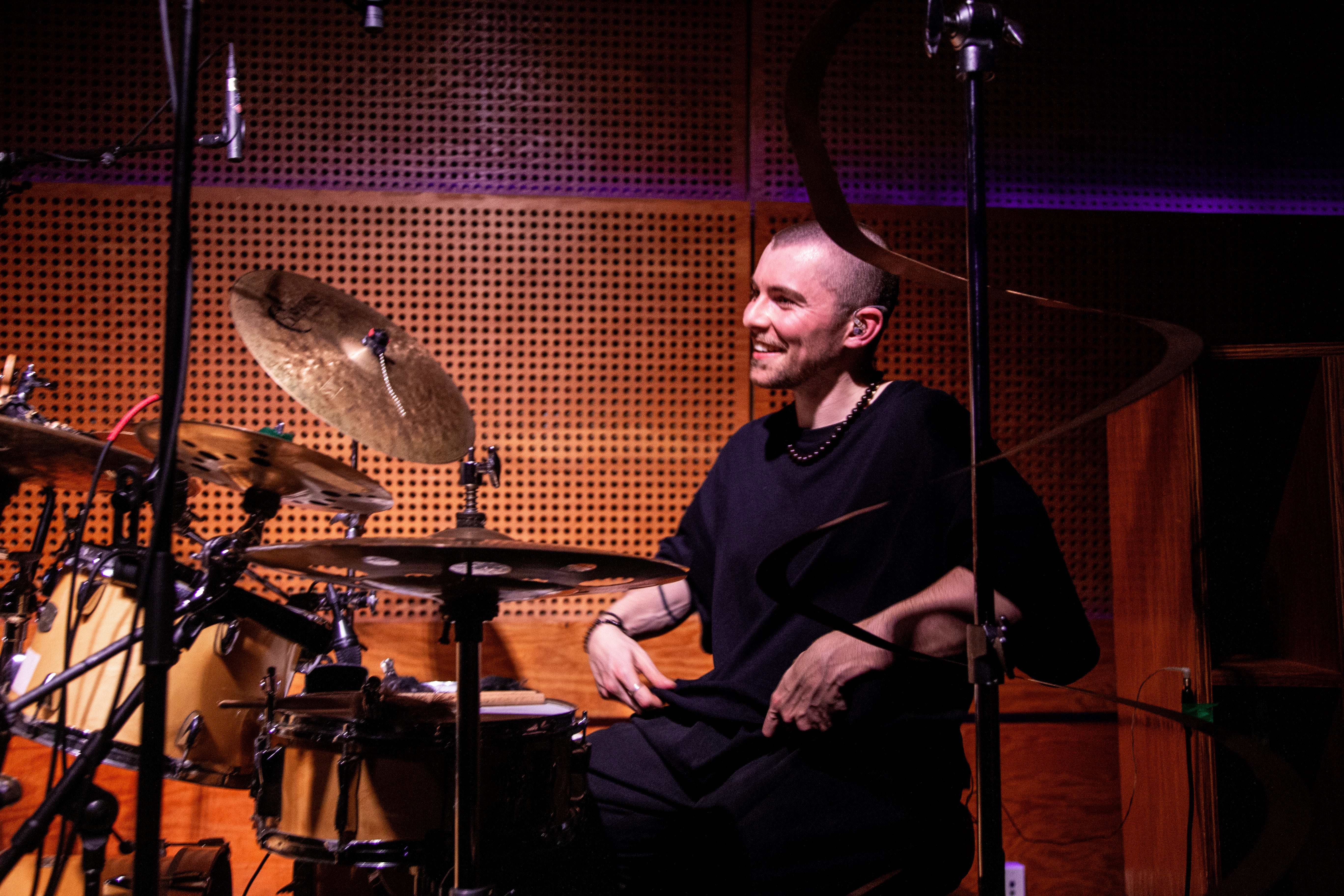
“There’s usually a group of 10 or so drummers surrounding [Graham Costello] (hint: he’s the drummer!), who aren’t even watching me,” Shortall exclaimed.
Despite not being a drummer, I was among those transfixed by Costello’s high-energy solo which reframed how the instrument could be experienced in real-time. Moments like this remind you that corto.alto’s strength lies in all its units.
Leading with tracks from their debut album Bad with Names like “Latency” then veering into unexpected remixes of Kendrick Lamar’s “Die Hard” or Ice Spice’s “Vaquita”, it’s clear the band is ironically well-versed in moment-to-moment spontaneity.
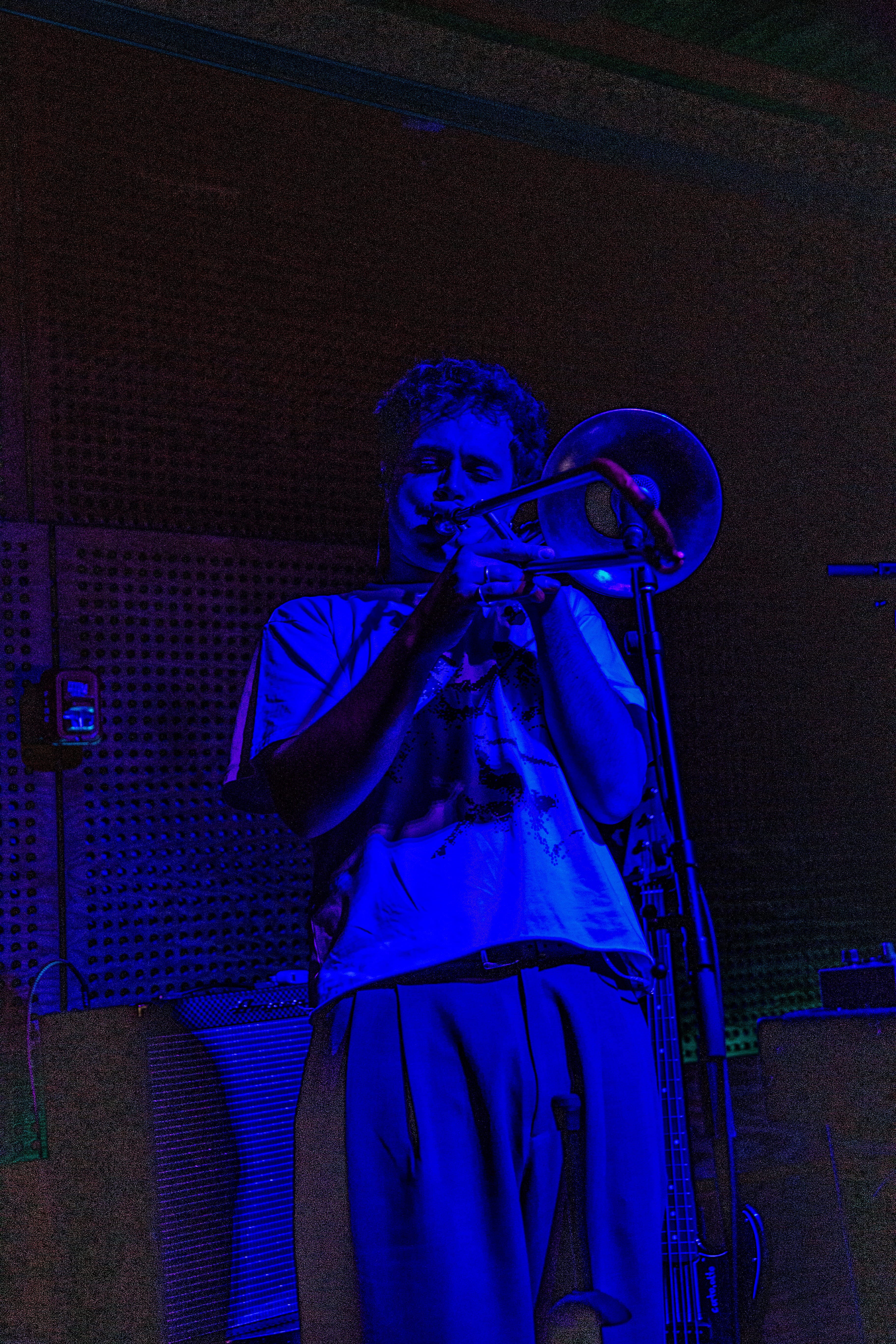
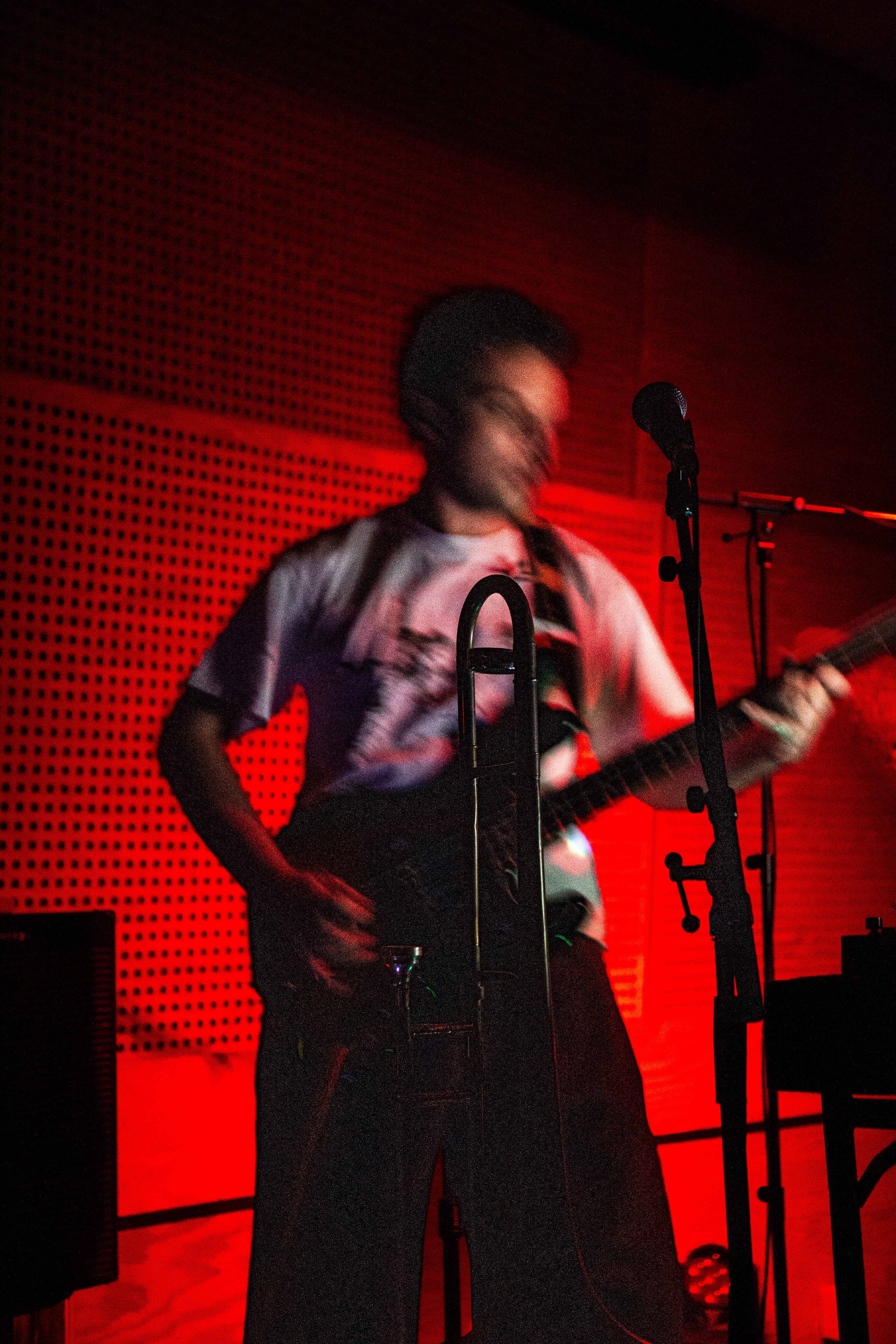
“We’ve played 200 gigs in the last two years,” Shortall noted and that mileage was audible. In the split-second decision to stretch a bar instead of closing it, one look across the stage signaling a re-route, the absorption of a mistake without breaking momentum, such imperceptible moments marked them as a family.
Shortall explained how many bands are put together through the lens of “Who’s the best bass player? Who’s the best drummer in the city? Who can shred at the saxophone? Let’s put them together and that will be a good gig… and on paper that makes sense.”
But nuanced chemistry can’t be written on paper. The life corto.alto has experienced with one another over the last 10 years palpably resonates in every off-the-cuff joke, eye glance, and sharp instinct to the way the music was evolving live.
The remixes aren’t just a novelty, they allow diverse audiences to latch onto different entry points of the show. While a Belieber (like myself) may feel a rush of familiarity hearing R&B hit “Yukon” reversed and spun on its head, an OG 60-year old jazz fan, perhaps listening to Justin Bieber for the first time, experiences the song anew while grounded in the group’s jazz sensibilities woven throughout.
Shortall’s wide spectrum of listening habits from jazz, electronic music, hip-hop, to classical, refuse clean categorization. The funny thing is in the production process, Shortall never pre-plans the genre mixes, they’re really just, “f*cking around and finding out.” And that breeds a distinct sound – one that is synonymous with corto.alto.
As cheesy as it reads but genuinely put by Shortall, “you’re the best at being you… you spend 20 years trying to sound like someone you look up to, you’re only going to be second best.”
At a time when the music industry thrives on replication, trend-chasing, algorithm-first thinking, and relentless digital marketing, corto.alto feels quietly radical by simply choosing to show up as they are. The band is proof that we so desperately are craving what is organic.
That goldilocks “just right” feeling extends its way into corto.alto’s most recent collaboration with Mick Jenkins “WHODIS.” After scrapping several early drafts, as a long-time fan of Jenkin’s album The Waters, Shortall had to deeply, “envision what the sound would truly feel like.” The result? A track that thrives on mutual artist exchange, a sick hip-hop beat, and the perfect immersion of both soundscapes as opposed to just “one of [Shortall’s] tracks with a 16 bar thing.”
With much more to come, corto.alto has built something increasingly rare: challenging the notion of music as a product to consume, but bringing back the best part of it all, something that feels lived.