The woodchips prickled my legs as I accepted my fate, releasing my grip on the monkey bar and dropping into the soft pile of sticks below. I can feel the blisters forming on my soft hands, not yet worn from adulthood. As I flex my fingers, feeling every burning sensation left behind from hours in the jungle gym, I rise eagerly to take on the monkey bars again. I can hear the distant chatter of my older sister giggling with her at-the-time teenage friends on the swings. “¡Lilibeth, ten cuidado!” Be careful!, my mother yells from outside the jungle gym, holding my baby brother’s hand, knowing her middle daughter was always the boldest. During the summer, while school was out, my mother would take her three kids to our local park to let our energy run free. “Te pareces a un chivo.” You look like a goat, my mother would say every time I did something rambunctious. Looking back at it now, I think our local park was our “babysitter,” allowing my mother to take a seat, socialize with her friends, and just catch a break. The park remains a safe space for me today. It’s a third space for families, friends, and communities to gather for tranquility and play. Coming from a family that didn’t have a lot of money, going to the park was an opportunity for my family to enjoy fun activities, sports, and celebrations. I am an avid park-goer.
Thanks for reading Santulan's Substack! Subscribe for free to receive new posts and support our work.
I am also a kid of immigrants.
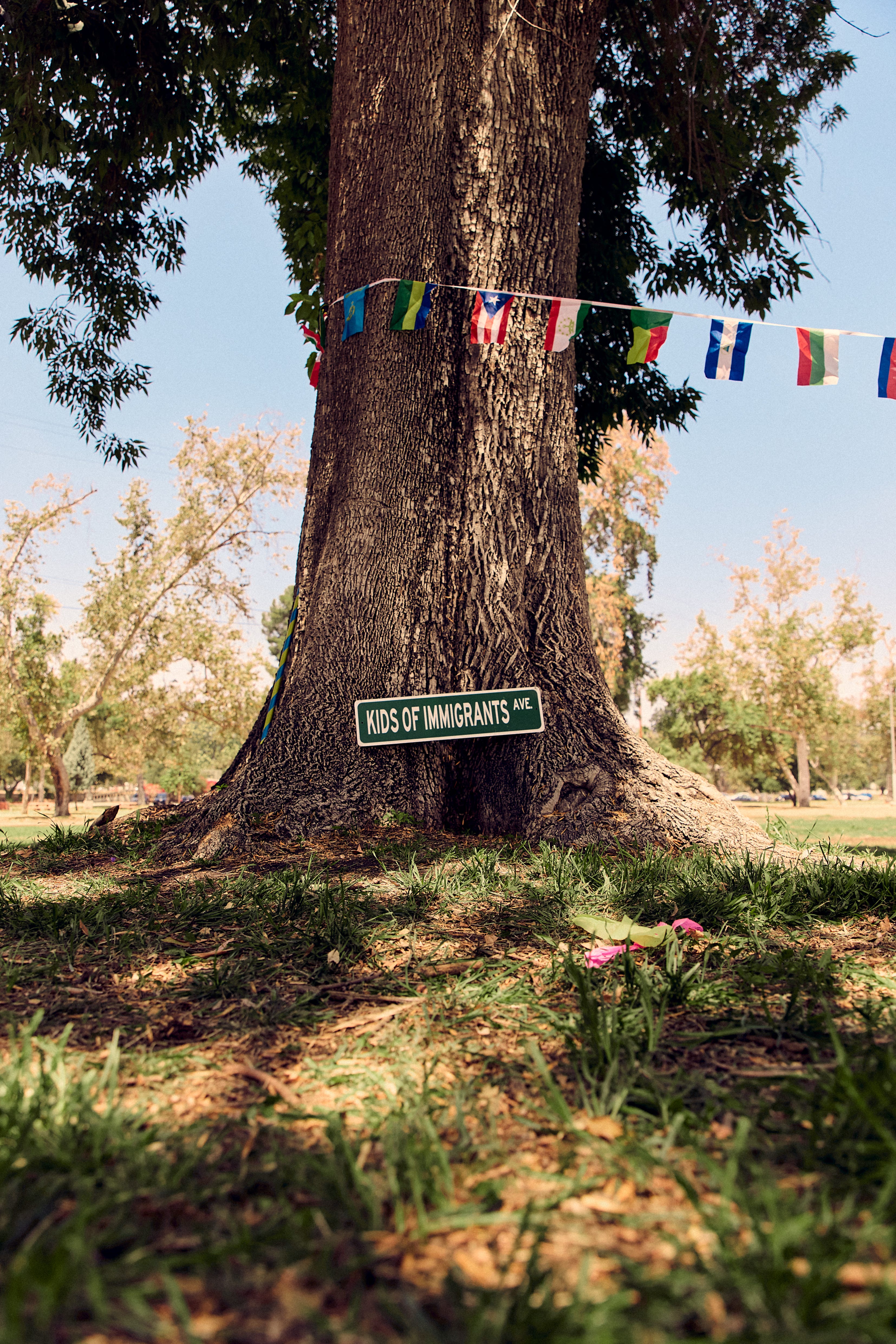
Growing up as a child of immigrants myself, the word “immigrant” was considered a bad word. Being an immigrant or coming from immigrants was not something to be proud of, nor was it something to be discussed. Whether it was for safety or from shame, that piece of my own and my family’s identity was to remain hidden. However, seeing the bad word printed boldly across a t-shirt for the first time back in 2018 intrigued me. This clothing brand, called Kids of Immigrants, is a force to be reckoned with. When the Santulan team approached me with the opportunity to cover topics that resonated with pillars of my identity, I was thrilled.
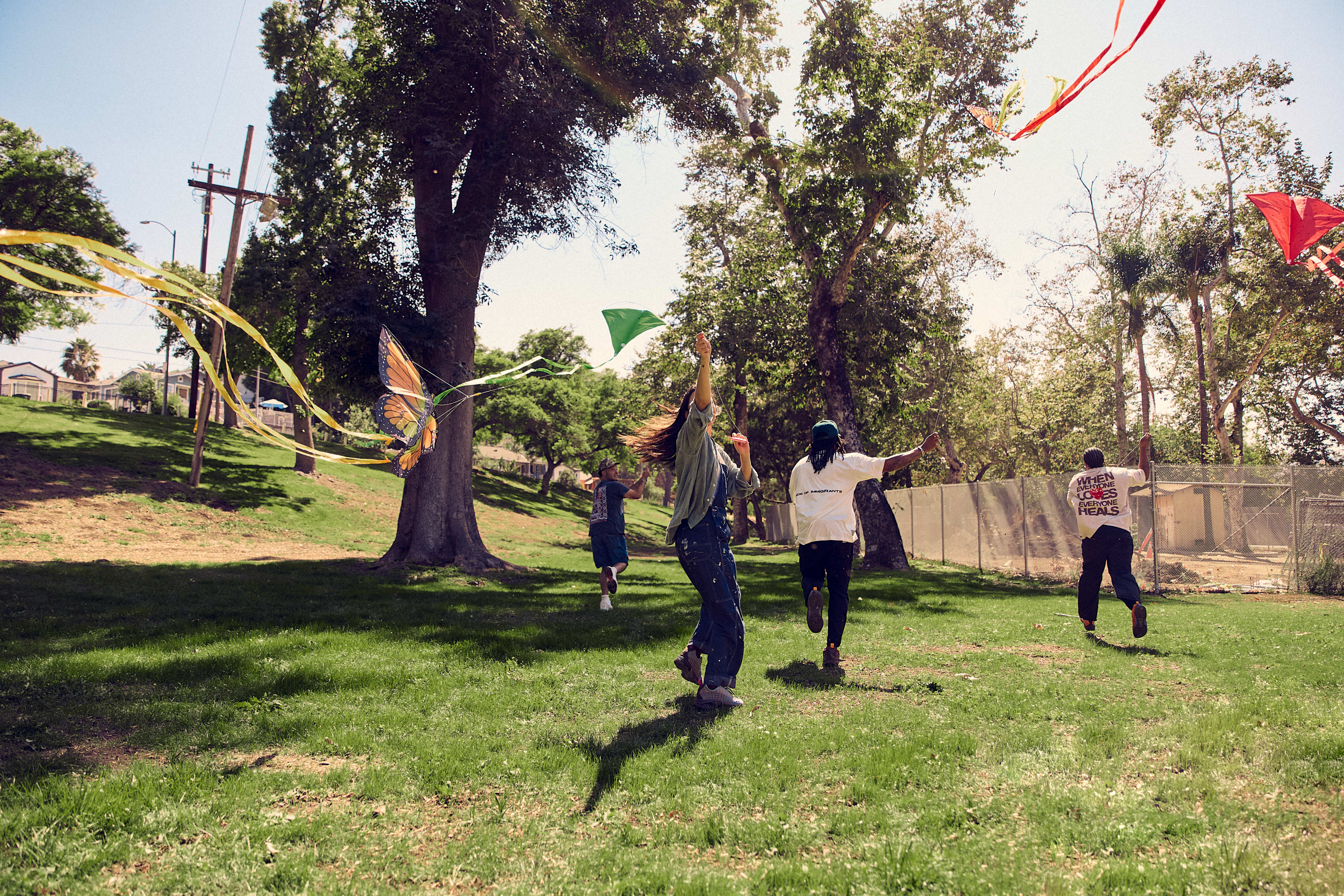
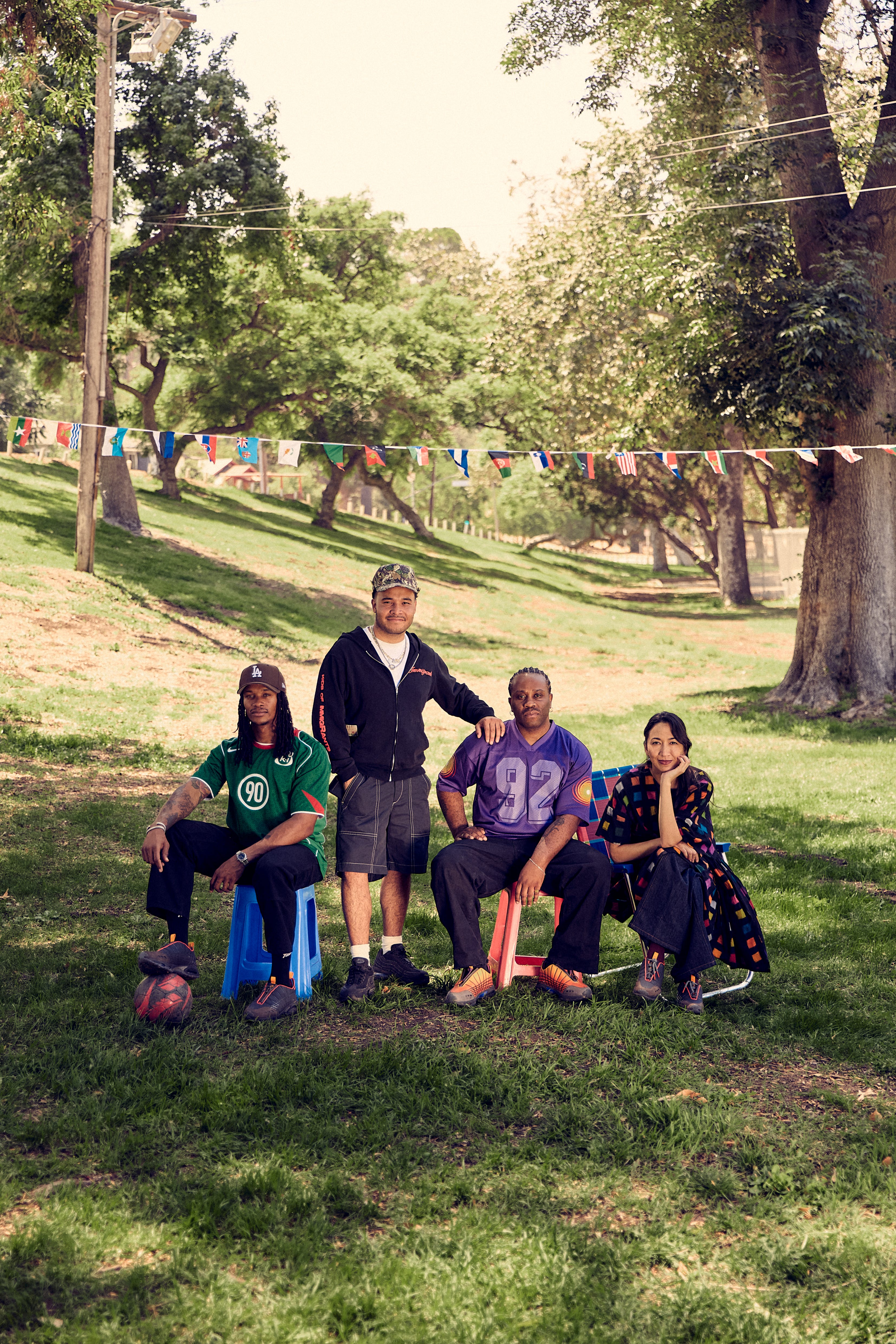
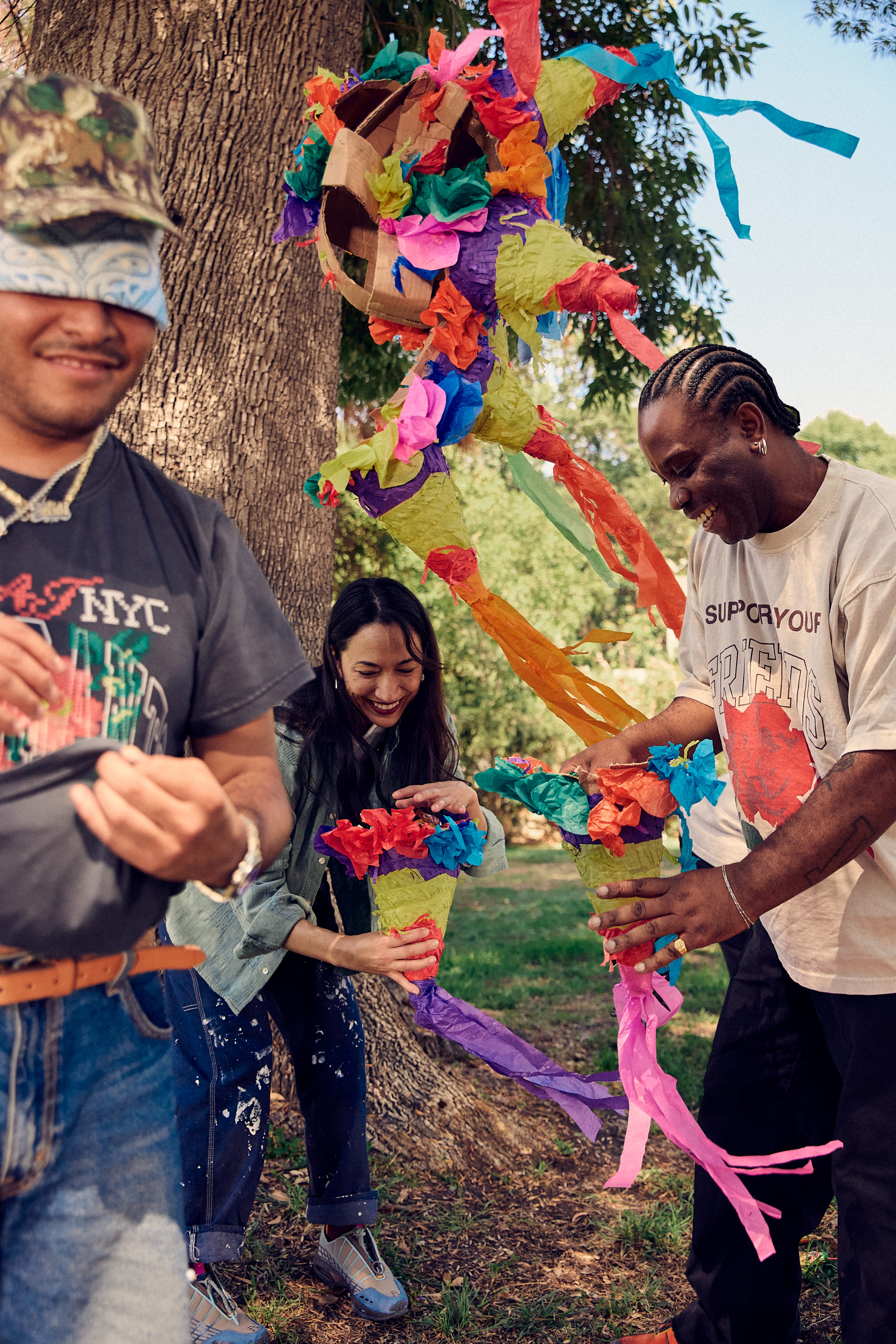
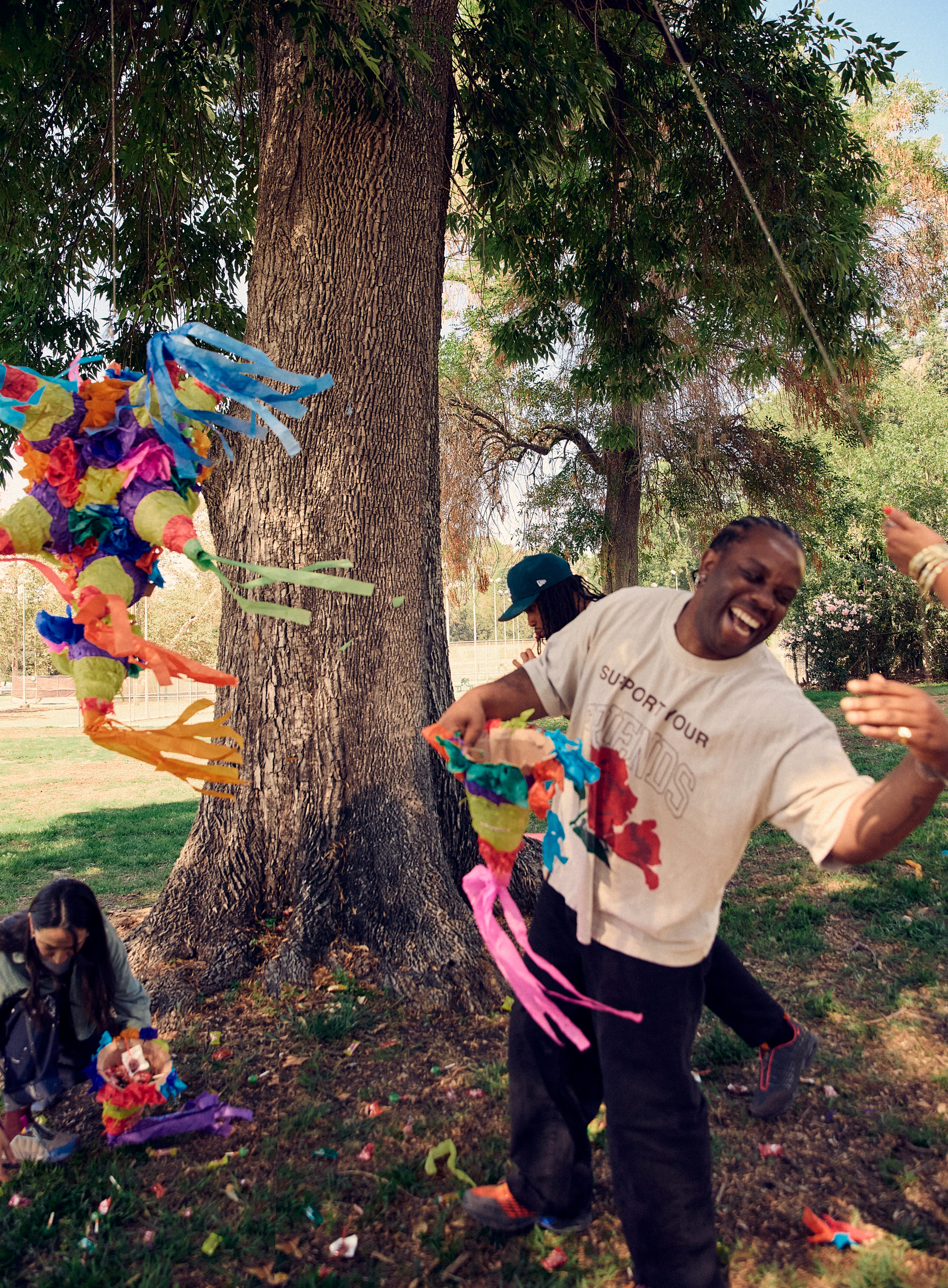
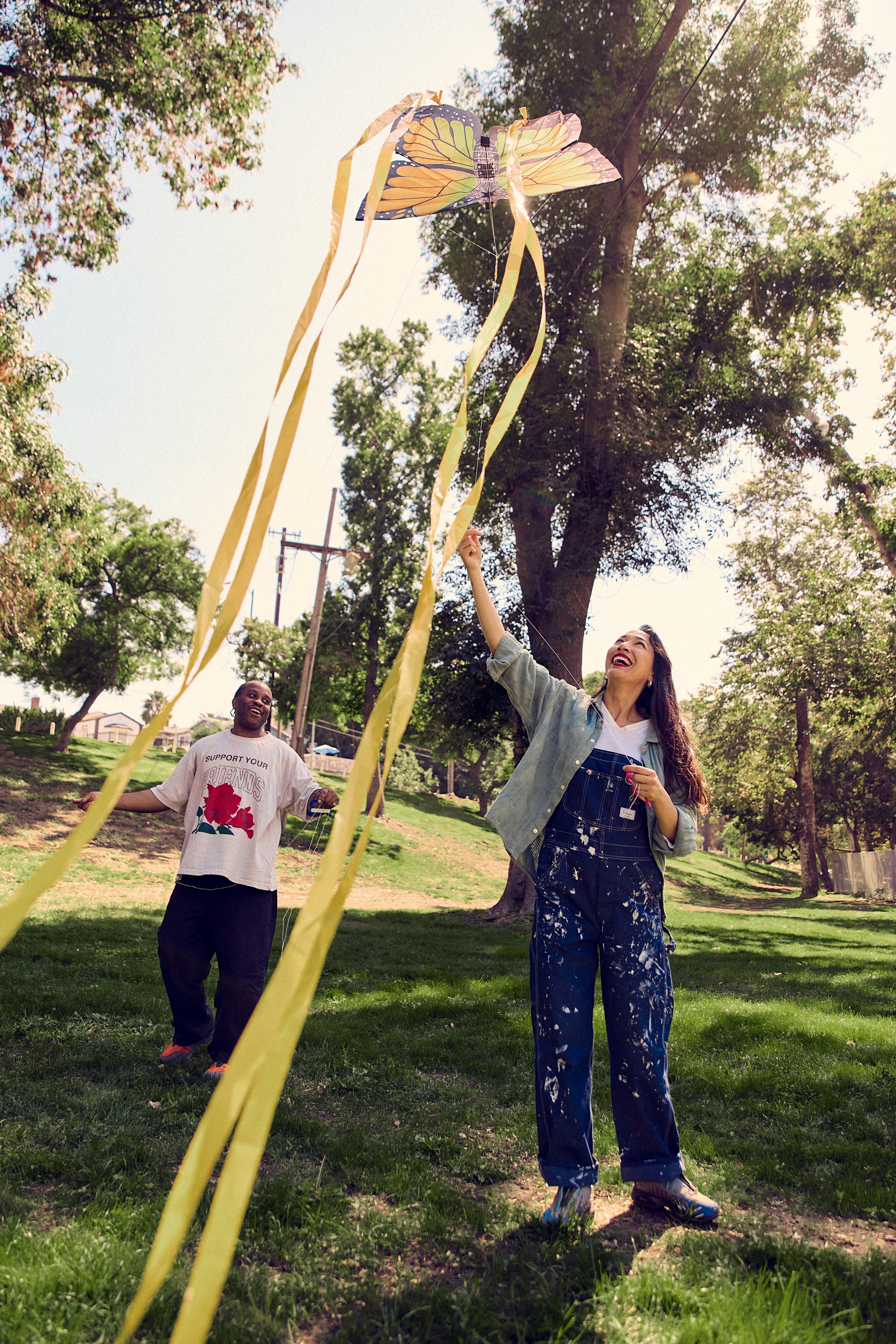
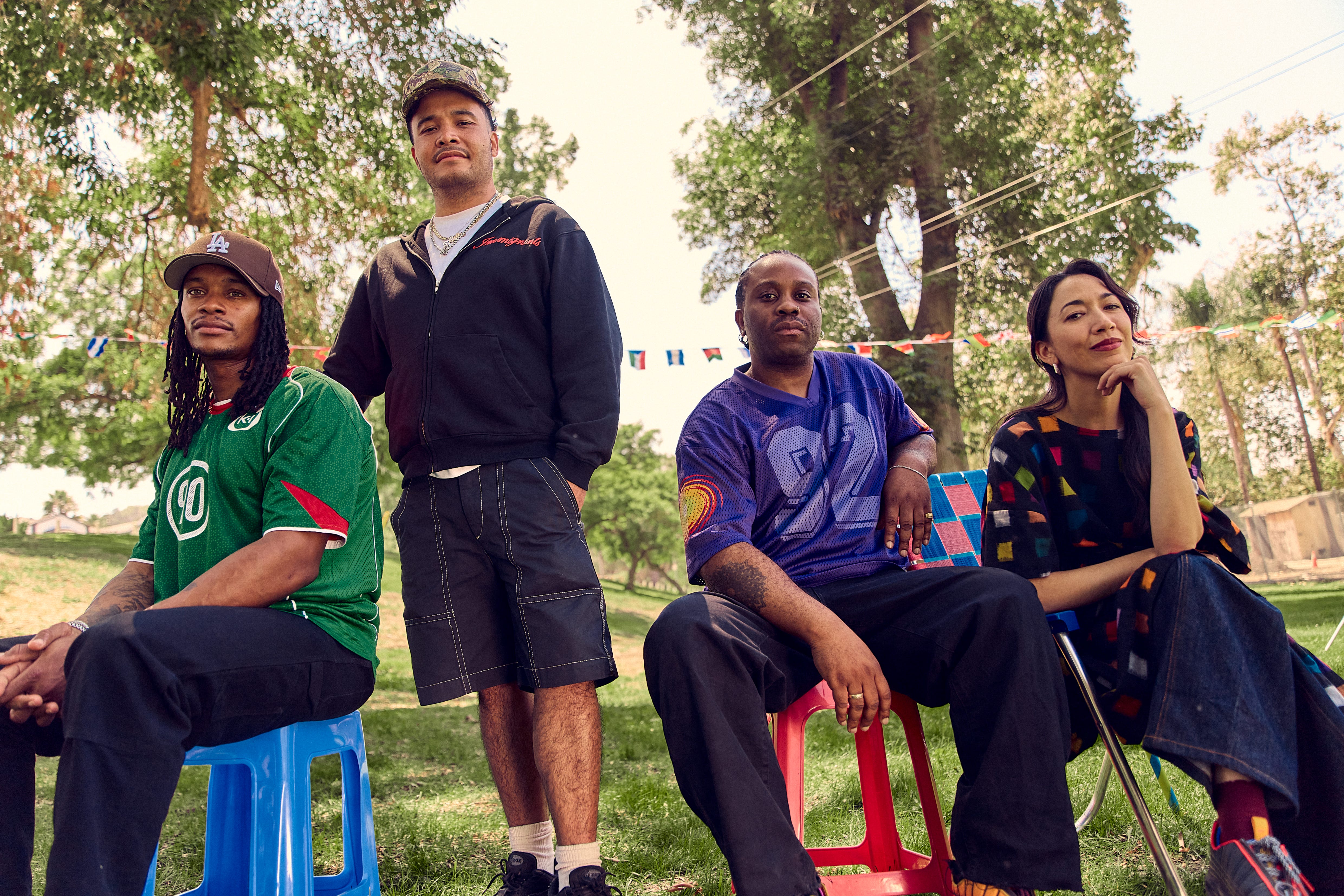
Third spaces have come under attack with recent ICE raids, military intimidation, and racially charged detainments. Our safe spaces are in jeopardy, and the community is terrified. This piece, a beautiful combination of visuals and written word, created by the community for the community, serves as a direct response and reimagines the park as a safe space. The images shot and directed by Brittany Bravo represent the power of children of immigrants to gather, create, and lead. Rooted in joy, celebration, and immigrant pride, this cast and crew—made up of artists, entrepreneurs, organizers, and visionaries—embody the idea that we are the leaders we have been waiting for.
Through creating art, claiming space, and uplifting the community, we can confront today’s challenges and serve as a beacon of hope. This collaboration reflects the community Kids of Immigrants has created—a future shaped by community care, cultural pride, and one that supports the creative force of the next generation.
We had the opportunity to discuss with the Kids of Immigrants team what it means to use their creativity to strengthen hope and representation, while ushering in the next generation. In difficult times, community care becomes essential—especially as we approach their ‘Support Your Friends’ month.
Lush plant life danced amid a knit of mid-century furniture, offering a setting that felt more like the coolest listening party you weren’t invited to, and less like where Weleh Dennis, Daniel Buezo, and Debbie Gonzales would be grilled about their baby, Kids of Immigrants. An earth-toned, diamond-patterned rug and a deep blue printed couch created a warm, calming atmosphere—one that was immediately cut through by interviewer and comedian Sureni Weerasekera. She joked, “The melanin, y’all look like a college pamphlet. You know that, right? I feel like if I put DEI into an AI image generator, a photo of y’all would pop up.” They laugh in a way that says, We don’t take ourselves too seriously.
Debbie, Head of Community & Creative at Kids of Immigrants, is sporting one of the brand’s pieces from their recent collection, “Built to Last, Here to Stay” – a black zip-up sweater with the logo, “Kids of Immigrants” flashing in silver rhinestones, matching her silver Nike T90s, pairing perfectly with a pleated black skirt à la Issey Miyake and a bold red lip. Weleh, Co-Founder, is clad in an all black fitted look: a t-shirt (that dare we say, shows off his muscles), slacks, and classic, low-rise Doc Martens. Daniel, Co-Founder, in a classic streetwear look: a camo hat, a white graphic tee from Café Colmado in New York City, a textured baby blue button-down, light grey pants, and sneakers (we’re sure he has muscles too under this flattering, baggy look).
Sureni Weerasekera: “I just wanna say, personally, I’ve known of Kids of Immigrants for years. I remember seeing the name ‘Kids of Immigrants’, and I did a double-take. I was like, ‘Wait a second, that’s me!’ You know what I mean? I never once thought that looking at American Eagle, right? …we got good genes.” Sureni jokingly nods to Sydney Sweeny’s campaign. “And I would love for you to introduce yourselves with your name in the context of being an immigrant kid, what you actually do for work, and what your parents think you do for work? I’ll start. My name is Sureni Weerasekera... I’m a stand-up comic, actor, writer, and my parents think I say ‘fuck’ too much on stage. Sorry, Mom!”
Daniel Buezo: “My parents are from Honduras. They don’t really understand it. I think after years of consistency, and saying that this is what I’m doing—they kind of get it. One day, they think I make t-shirts, which they don’t understand because my mom used to be a tailor, so she was like, ‘Oh, you make suits and dresses!’ and I was like, ‘No, we design t-shirts.’ She’s like, ‘You make t-shirts?’ My father thinks I make shoes the next day, and it’s like, not really… Yeah, we design the shoes, but we don’t make the shoes. I think they know that we’re doing something creative, but I don’t think they understand what creativity means.”
Weleh Dennis: “My parents are originally from Liberia. They are pretty hip to what I do. My family all know what I’m doing for the most part. They just want to know that I’m happy doing what I’m doing. They’ve been supporting us from day one. I played basketball the majority of my life. I always appreciated the culture of skateboarding, too, and seeing all the different ethnicities coming together with similar mindsets.”
Debbie Gonzales: “I’m a first-generation, Mexican-American, and I think my parents think I’m a hustler of some sort. Now that they have been to a lot of our events and brought them in as talent, they understand that I’m in a creative field and maybe a boss of some sort. I think they’ll never fully grasp what it is.”
Issue 04 of Santulan Magazine • Photographer: Brittany Bravo
Founded in 2016 by Weleh and Daniel (and unofficially founded in 2015 in Daniel’s living room), Kids of Immigrants began as a clothing brand that donated profits to organizations that helped Los Angeles. The two creatives started this journey by visiting thrift stores, selecting pieces, and hand-painting them. Debbie later came on board after working as a stylist and touring with Kehlani. What began as a clothing brand boldly stamped with the word ‘Immigrants’ has grown into a movement for representation. Daniel points to the moment Weleh transformed his own relationship with the word: “We don’t run away from the word immigrant, we run toward it and run with it.”
Debbie: “It’s nine years later and we’re still here. It’s evolved in so many ways. At the end of the day, it’s pride that’s allowed us all to lean back into our roots and celebrate it, rather than being embarrassed by it.”
“I think what we have created is a space for others to also feel safe and seen and celebrated,” Debbie adds. “Whether it’s the storytelling, whether it’s the designs that unapologetically say ‘immigrants’ or ‘Kids of Immigrants’ or whether it pays homage to our parents, it’s become such a big part of who we are. Growing up, we weren’t as proud of my family being of mixed status. It was like you don’t say that you are a kid of an immigrant – out of safety, out of fear, out of you know, all these things.”
Sureni: “That is what that is, coming back to yourself… because I think there’s a self-rejection based off your identity, when you emigrate somewhere. To come back to yourself, for your roots and to have pride once again, that is such a beautiful return to home. Where did that pride come from? Why do you feel that, even though so much is perceived on you, do you feel like you believe that within yourself, like you have this inherent pride? Did you always have that?”
Weleh: “I don’t know if it was pride. I had the same upbringing as a lot of kids — when my parents packed me lunch, I didn’t always want to bust that open at school because it could have a strange smell. But I think again about the idea of duality, I feel like when we’re speaking about being American or an immigrant in America. I think the idea for me was this idea of the dualities of the life I lived at home versus the life I lived in school.”
A beacon of the brand’s growth is its annual Love Day event – a celebration hosted by Kids of Immigrants to give thanks to the community with local vendors, games, music, and more. Traditionally hosted in a park, the team reflects on how much parks meant to them in the brand’s younger days. The event originated from the team’s clever scrappiness. They’d invite their friends to a barbecue at the park in exchange for modeling Kids of Immigrants pieces. Love Day is a heavy lift for the whole company, but when the day comes, it’s obvious why this celebration is important. In 2023, the City of Los Angeles officially proclaimed May 6th as Love Day, recognizing its significance to the community.
Sureni: “It’s that labor that no one talks about, where everyone wants a house party, everyone loves a house party, but nobody wants to throw a house party. But you have to throw the house party because the house party is the best kind of party, and that requires cleaning up piss off the floor. But we’re so grateful to that person. So, thank you for metaphorically cleaning the piss off the floor to make this shit happen.”
Daniel: “We’ve cleaned worse.”
Sureni: “No, actually, go into that. Elaborate on that.”
Daniel: “You know, to throw an event that’s gonna host over a thousand people at a park. I think every Love Day outside of this one in May, I’ve left the park at 1 AM, even 2 AM, smelling like garbage juice.”
Sureni: “Oh, yeaaaaah.”
Daniel: “It’s funny, my family travels. They come to town for it, and they’ll stay at the park with me ‘til 2 AM. They’re like, ‘No, this is part of the experience,’ and they talk about it ‘til this day. The day we got into my car and we all smelled like straight garbage juice… These are the spaces that we are honored to create for people like us—for our generation, the younger generation, and the older generation. It’s the day we’re constantly reminded as to why we do what we do, and everything that we represent shows up IRL for seven hours.”
Each team member had a different relationship to parks during childhood. Yet, the sentiment was similar across the board – parks are a sacred space for family and community.
Sureni: “Did your family take you to parks? What was your relationship to parks and nature growing up?”
Debbie: “Yeah, definitely. My dad is, and still is, an adventure dad. We always went somewhere every weekend… They made it a big deal for us to see different things—whether it was nature or like trying different sports. It was never the newest anything, but it felt like we had a little bit of everything. Maybe it wasn’t a Disneyland trip, but it was a trip to the lake, that’s what we could afford. They had a beautiful way of giving us everything, even if, on paper, it wasn’t the shiniest thing. It was just the joy of all of us being together and experiencing something new. That was a huge part of how I grew up. And I think that’s still prevalent in how we are as adults now. Exploring or craving that, because it feels so nostalgic. It’s such a huge part of home and I think what grounds us all.”
Weleh: “I think my connection with spirituality is this idea of omnipresence, and so if I could get as empathetic with as many people as possible, I feel like I’m getting closer to this idea of a higher power. I think hearing different perspectives is something that expands my mind and imagination, and it’s like really cool to see your friends level up there. I hope they see themselves how I see them. Then, we can spread that perspective to each other versus this assumption, or kind of like a lack of trust in.
Sureni: “You know you might break my vase.”
Weleh: “That’s something that I feel like Love Day is synonymous with—involving people and just giving that trust from a human, from like a humanities place.”
Sureni: “When you busted out the word omnipresent, I was like, He does mushrooms.”
As the company approaches its 10th anniversary, Kids of Immigrants has kept their word in using creativity to give back to their community. Today, Kids of Immigrants is deemed a brand that stands by the community. However, this has not been the case since its outset.
Debbie: “That was the inception of what has now been coined as community or marketed as community. It’s always been part of the ethos of the brand.”
Daniel: “It’s important that we become that bridge to our community. It doesn’t matter who the brand or corporation, or partner is… we’ve been able to figure out ways to bring it back to our community. 10 years later, with more resources, we’re just leveling it up all the way. I would use Buchanan’s Whisky, with which we’ve been a partner for the past three years. We’ve been able to donate over $150,000 to several organizations, small businesses, and this is built on that trust that the partners build with us, but also on the trust that our community has built with us. We want to continue to be the bridge. To be a platform. To be this place where our community gets to empathize with different cultures. Kids of Immigrants is a multi-generational brand. It’s a multicultural brand.”
As pioneers leading the intersection of branding, marketing, and social impact, the team’s latest mission is to provide support for the future leaders of the immigrant community. Whether future leaders are inspired to start businesses of their own or channel their creativity through activism, the brand is eager to use its resources to help the younger generation flourish.
Debbie: “It’s us supporting future leaders using the platform that we have built. It’s not like we’re telling them what to do. We already see it within them. We’re almost like the big brothers and sisters that are here to cheer you on, and be that bridge because we didn’t have it. It’s our way to pay it forward, to support our friends.”
As the crew looks to the future goals of Kids of Immigrants, there’s a shadow of past challenges and lessons that guardrail the way forward.
Sureni: “Can we highlight an accomplishment and maybe an L, and what you guys learned from that? Like a big lesson that we learned?”
Daniel: “I think with lessons, we learn them every single day. I think the biggest failures, the biggest L’s, have been the best lessons, and the reason is why we’re here. Like having moments where you know they print some shirts incorrectly and you lose $25,000 and that’s like all the money you have.”
Sureni jokingly gasps: “Noooo, don’t say that!”
Daniel: “We’ve had those very defining moments, and it’s hard at the time. It’s great to have a team when I’m losing my mind. It’s this thought of, we’re always gonna figure it out… Some of the hardest lessons are to do with money because every single penny counts. We don’t have money to burn, we don’t have investors.”
Issue 04 of Santulan Magazine • Photographer: Brittany Bravo
The bond between Kids of Immigrants and the local community is paramount for the team’s philosophy. Kids of Immigrants actively strengthens this bond through direct fundraising and collaborations with relevant organizations. They recently partnered with CHIRLA (Coalition for Human Immigrant Rights) to develop the “Know Your Rights” campaign, helping undocumented immigrants equip themselves with knowledge to protect themselves during the recent ICE raids. Further bridging the gap, Kids of Immigrants successfully united over 180 brands to raise nearly $250,000 for various immigrant-centered organizations such as CHIRLA, Immigrant Defenders Law Center, United We Dream, ACLU, Inclusive Action, and the Central American Resource Center.
Sureni:“I want to talk about your collaboration with CHIRLA for the Know Your Rights initiative, directly in opposition to the recent aggressive and dehumanizing ICE raids. How did this collab come to fruition? And what have you learned about fashion as a vehicle in the activism space?”
Debbie: “It’s always been part of our brand–part of our individual responsibilities–to bridge nonprofits with brands to introduce them to our community and vice versa. I think there’s been so much power in being that bridge in these moments… It’s offering light, offering support, offering tools and resources. We may not have the solution, but we can help support those doing the hard work.”
Daniel: “I hope that we can give people the strength to fight the fight how they know best. Not everyone has to do the same exact thing. We’re all different, and we’re all skilled and gifted in so many different ways. Some people’s fight may be prayer. Somebody else may be on the front lines of the protest, and someone else may be designing a flyer for the nonprofit.”
In the height of these ICE raids across the country, activism fatigue is inevitable. However, Kids of Immigrants offers a versatile vehicle for activism across many levels. The company hopes these pieces not only provide safety to the community, but also become an opportunity to believe in themselves and remember who they love.
Daniel: “I feel like what I’ve been seeing is this activism fatigue. When I say we can do anything, but we can’t do everything, I think that’s really important for everyone. Especially some of the younger generations who have fire in their heart. I love to see the work that they’re doing, ‘cause it’s like, they’re going to save the world. And, also–(dog barks, interrupting the interview)”
With creativity at the forefront of the Kids of Immigrants’ purpose, the team understands the weight the brand carries across communities. In 2016, when the brand began, people questioned whether printing the provocative term “Immigrant” across a t-shirt would be a good idea. Yet, the brand remained proud and “ran to the word,” embracing Weleh’s mindset. The team has dreamed for this brand to introduce people, not just to the clothing, but to different experiences and worlds. Each project leads with the objective: “How do we bring people to our world and community?”
Sureni: “What is the future of Kids of Immigrants? I mean, obviously, you’re going to have another Love Day, for sure. But, um…”
Daniel: “Are we?”
Sureni: “I don’t know. Do you want us to pour garbage juice again? Let’s run it back.”
Kids of Immigrants intends to grow the word globally. The team feels that ‘immigrant’ carries a similar negative undertone across the globe.
Daniel: “It’s really exciting to me to build a global community, to build outside of LA and New York. That’s something that we are excited to recontextualize–this word in our own way, and use our art as a form of imagination of a better day… At the end of the day, we live in the United States, a capitalistic country, and how you find your way through that in a meaningful way that is pure to you and your community, is very difficult.”
Wishes, hopes, and dreams are abundant for this powerhouse of a team. When each member was asked what wish they’d make after blowing out a dandelion, their true colors radiated.
Sureni: “I have one last question. You’ve been running around all day at the park. Your pants are green from rolling in the grass. You’re full of hot dogs.”
Daniel: “That was us yesterday (referring to the cover shoot)!”
Sureni: “You find a dandelion and you blow it out, what are you wishing for?”
Debbie: “Peace of mind and connection.”
Daniel: “I would say health.”
Sureni: “You got lower back pain?”
Daniel: “Shoulders and ankles… health and wealth. I hope I can live as many days as possible for it. And wealth, so it can go not just this generation, but for future generations to have, not necessarily wealth and money, but this wealth or way of thinking. This way of empowering and manifesting. I used to say in year one, ‘We might not sell luxury clothing, but we sell a luxury mindset.”
Sureni, looking into the camera: “Clip that.”
Weleh: “I wish for a farm.”
This interview has been edited for clarity and length.