


By Nile Brown
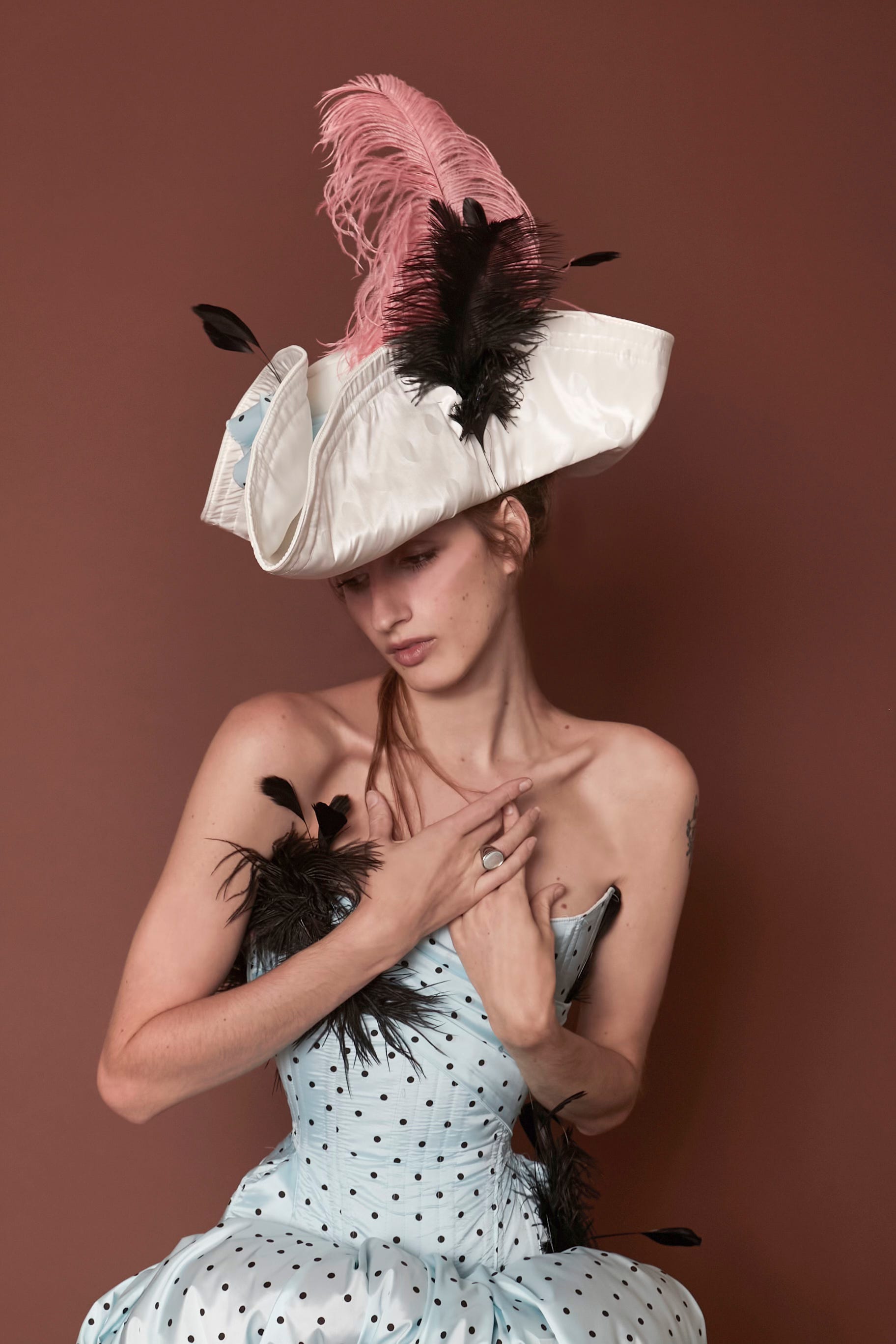
Ribombee, a small fairy Pokémon with gossamer wings, is tattooed on Erik Charlotte’s left shoulder. It gathers pollen to create tiny bursts of energy for others, despite seeming too delicate to run on anything itself.
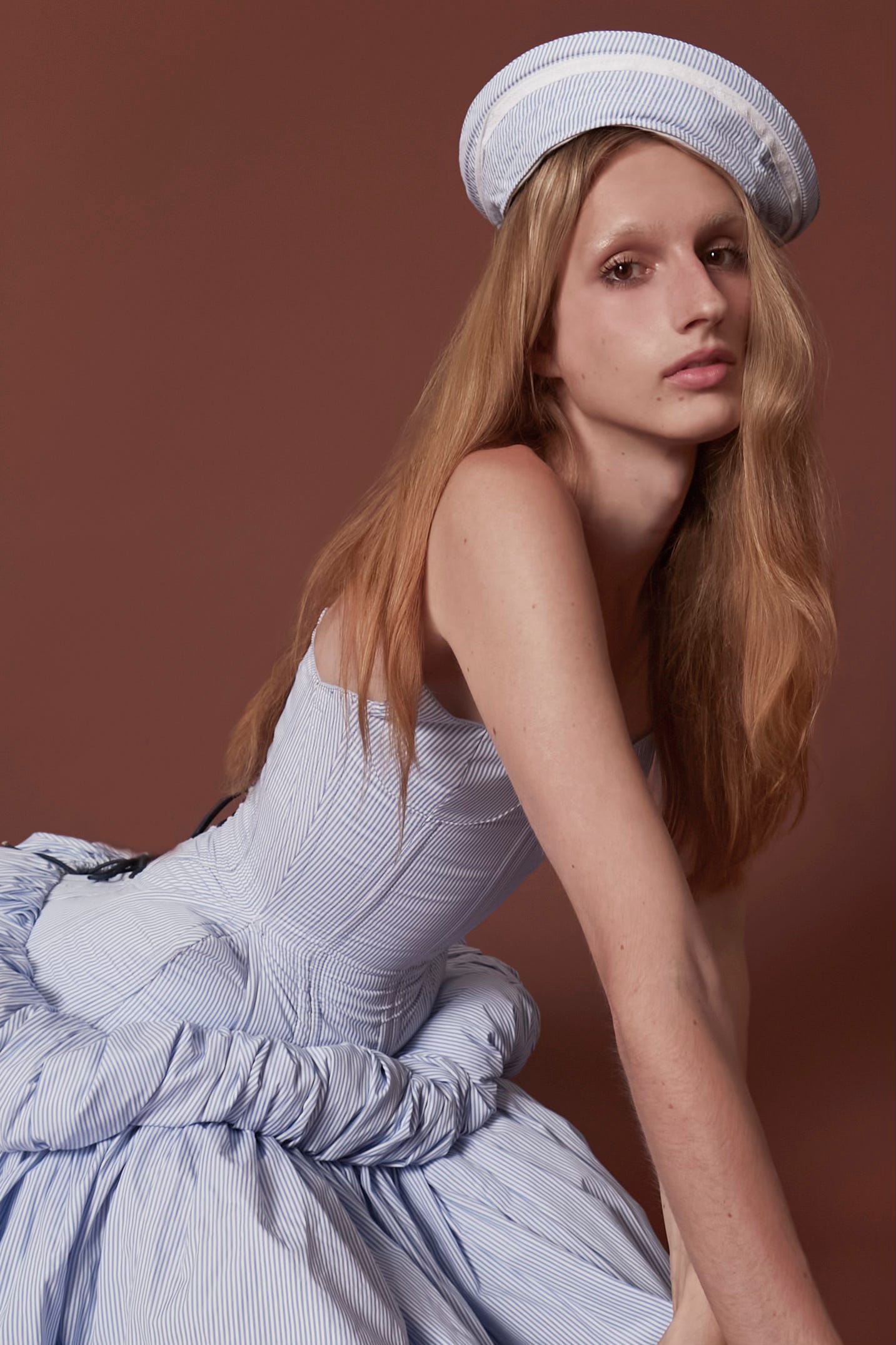
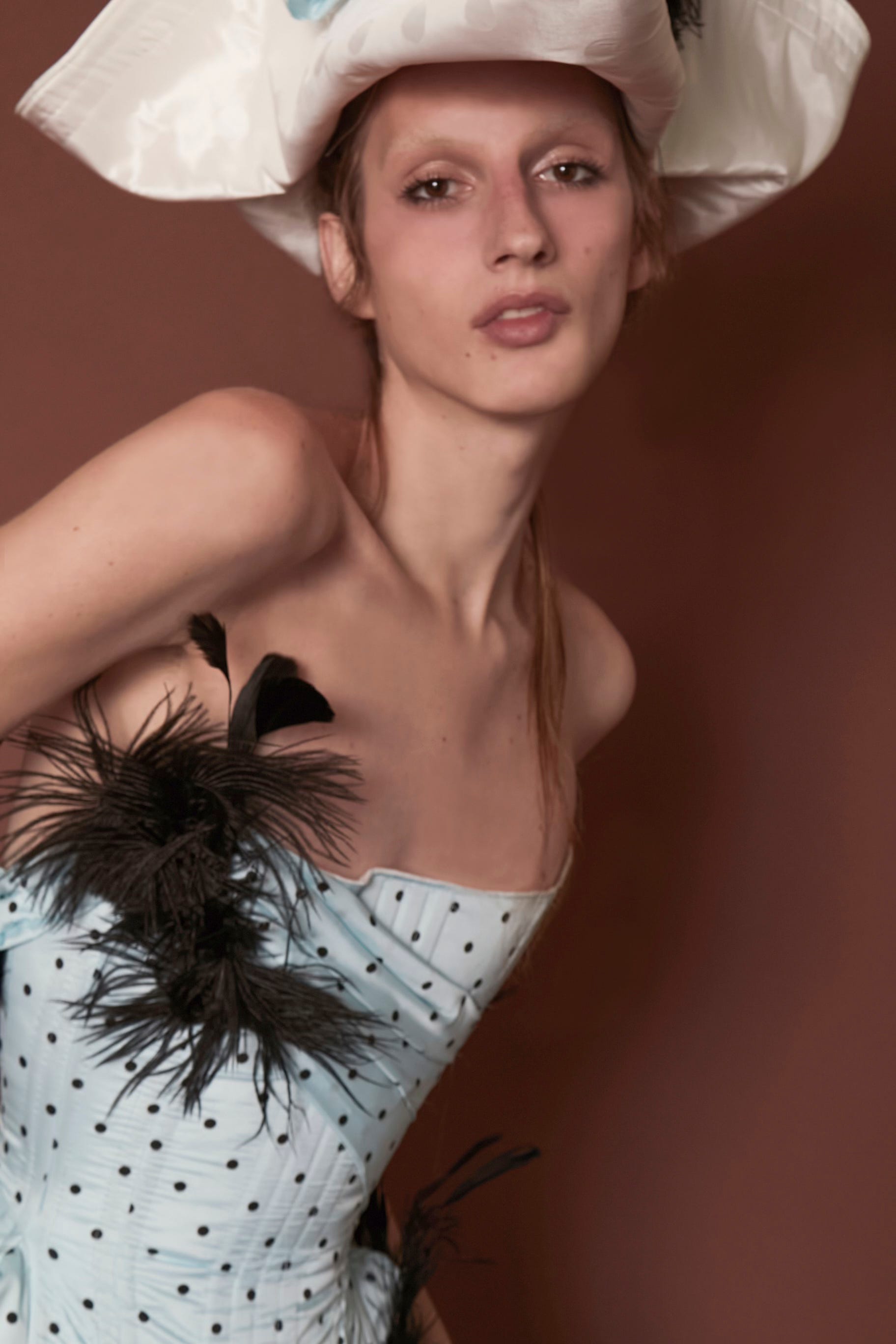
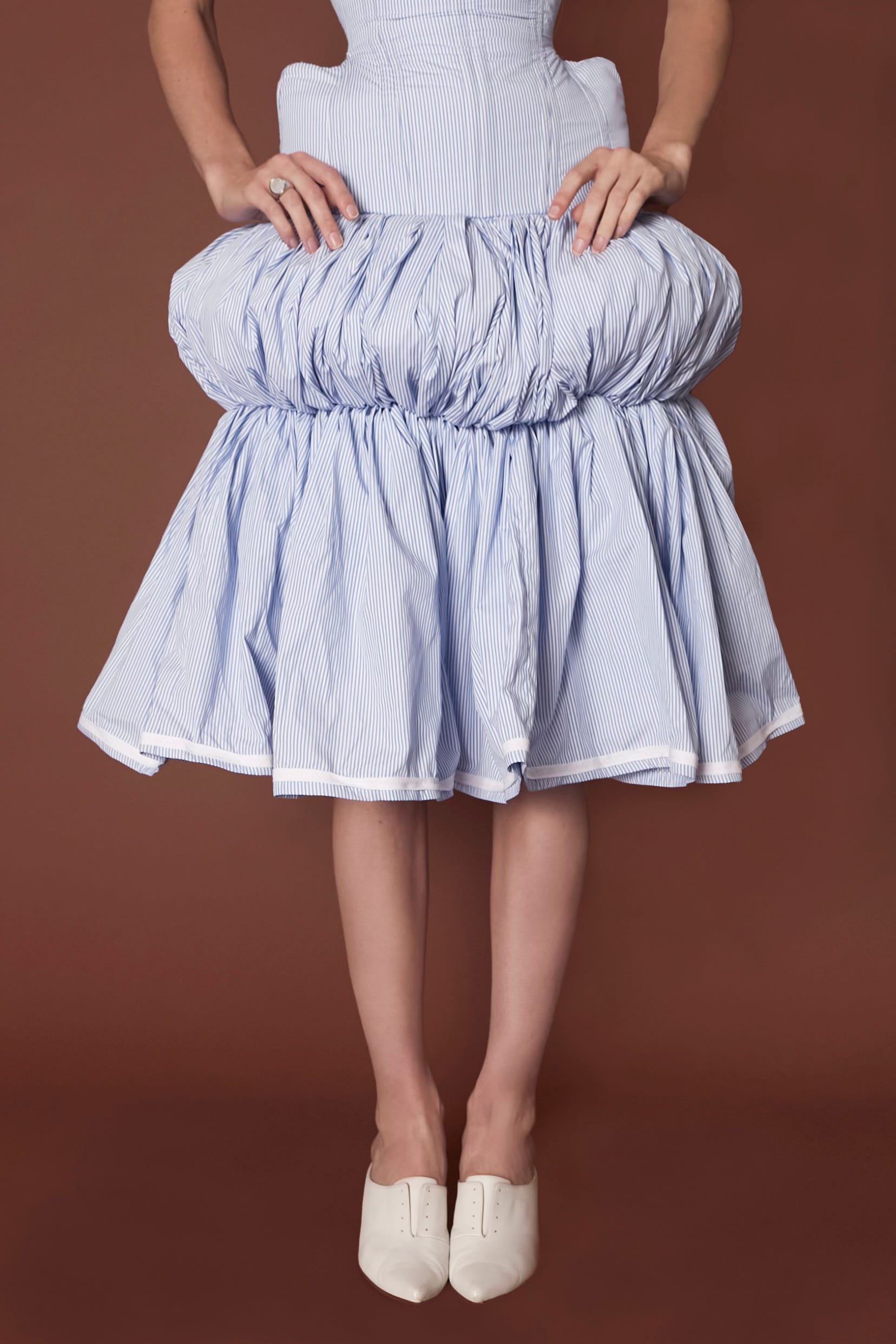
Erik Charlotte, the eponymous women’s wear house, is rooted in fantastical escapism. It’s her creation that exists in a whole other universe away from ours — where everything’s puffy and cinched and has a weird design language inspired by door and drawer handles, alcoves, and doorways.


Early Contradictions
Erik wanted to be an architect when she was young, and now she’s building a different kind of world. One stitched from fabrics like taffeta, twill, and brocade rather than concrete — dressing the likes of PinkPantheress, Halsey, Emma Chamberlain, and an ever-growing list of celebrities, all while somehow bending time to keep everyone else running.
Last summer, she spent some time in Vienna (where her dad is from) in nature and looking at the architecture. “I loved looking at all the buildings everywhere, like the regular apartment buildings or the apartment that I was staying in. The way that the door is framed. I love small details,” Erik said softly, framed by the white fireplace that doubles as a backdrop for her Instagram. A classic setting against which her avant-garde designs stand out. “I have this attention to detail that also comes in the form of my inspiration.”
The past year has been both tough and transformative for the young designer.


From the step and repeats of the AMAs to the stages of the Oscars and Coachella, her designs have been everywhere this year. In the few weeks since I visited her art-deco live-work studio, she has gained at least 20,000 Instagram followers. NYLON and the Los Angeles Times published pieces on her after my interview. And the brand is barely a year old.
“It’s hard because I feel like my dream projects change, and then I do them and I have to come up with a new one,” she said.
Finding a Signature
She’s been sewing since age 15 and is mostly self-taught (other than the basics her grandmother showed her). At first, she held back from sharing her work, worried that without professional photos it wouldn’t look polished enough for Instagram. After graduating from college, the stitches started coming together. “I had gone through a really crazy breakup, and I was just trying to figure out what I wanted to do with myself, because I had landed a job, and I felt like everything should be going well, but I was so unsure. Once I moved into this apartment, I felt like I had so much room for freedom. I brought a whole bunch of fabric with me, and I just started making more stuff with the time that I had.”
Erik continued, “And I was like, ‘I’m just gonna set up my tripod on my phone and take these pictures and post them and like, not have to worry about it.’ I felt like the barrier to entry was kind of removed for me. And so now that every product shot, every garment is shot in the same exact spot—it gave me a lot of freedom to shoot whenever I want. I can shoot on a workday and get it all knocked out. The focus gets to just be on the garment, because it’s the same backdrop every time. And so that’s when it really started to kick off.”
Eighty-hour weeks are her norm now while balancing a full-time technical corporate job and the collaborative, freewheeling universe of fashion. What began as chance Instagram follows has blossomed into a creative network of artists and stylists, opening the door to collaborations with MARINA and Ravyn Lenae.
Erik’s mind is on 24/7. Living and breathing fashion and wanting to work all the time. Wherever Ribombee gets its energy from, that’s apparently where Erik is plugged in too — she keeps going long after she should’ve burned out. It’s not always healthy. To find balance, she turns to video games, DJing, and baking.
“Having activities that I can be comfortable being bad at has really helped me,” she said. “I’m such a perfectionist when it comes to my work... It’s refreshing to bake a cake and totally fail at it, but it still tastes good.”
Dreams in Motion
Antithesis is also at the heart of Erik Charlotte.
“I had people texting me who didn’t know that I worked on it, like, ‘Oh my God! Did she make this dress?’ Because they could see that signature shape that I do.” Lindsay Normington of “Anora” (and organizer of the first unionized strip club in the United States!) wore an all-white, structural ensemble to the Oscars, which contrasted sharply with a sea of black tuxes and the black stage. The dress clung with a gossamer-silk sheen, its two loose armholes drifting off the sides like a garment in the middle of being peeled away, echoing Erik’s fascination with clothes that seem to undress themselves and reveal what’s beneath. Its corset, tiny waist, and big geometric hips are emblematic of the brand’s dedication to diametric opposition. Erik added, “I loved it. It was the coolest moment for me ever, just that my work could be so recognizable.”
Erik is preparing to stage her first runway show within the next year. She imagines it in a brick warehouse here in Los Angeles with natural elements like sand and water. The next collection will be grounded in realism and human emotion, offering a counterpoint to the fantastical elements instilled in its house codes.
“A lot of my work revolves around opposites. I love to mix two different things together. My ideation process has always come from dual ideas. I think that’s been a big theme in my life—I grew up super religious, but I was also trans, and those were two really dueling ideas. It’s something I’ve lived with, and it’s become a central theme in my work: two competing concepts. Sometimes one wins, sometimes neither does. But I like trying to find a way for them to coexist.” In Erik’s designs, those dueling forces don’t clash; they converse.
